The Alliance for Safety and Justice—a policy advocacy organization powered by over 180,000 crime survivors—recently published a new report highlighting seven policy recommendations that crime survivors around the country are calling for in an effort to put an “end to the cycle of violence and for more help in the aftermath of trauma.” Here’s more from ASJ on why these policies are so vital for crime survivors:
“Most crime victims suffer long-term physical, emotional, and financial harm from their victimization and the ensuing instability and untreated trauma. However, a national survey of crime victims by the Alliance for Safety and Justice (ASJ) shows most crime victims never received the help they need. Nearly 90 percent of victims did not receive economic assistance and three-quarters did not receive mental health support, according to the survey. The lack of investment in support for crime victims’ trauma-related needs leaves communities trapped in cycles of crime and violence.”
The whole report is worth reading, but here are three of the policy solutions crime survivors are calling for:
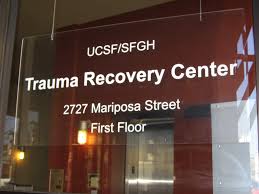
- Expand Access To Trauma Recovery Centers. Trauma recovery centers are “a one-stop center that provides mental health services, case management, support with navigating the justice system, assistance in applying for victim compensation, and a wide range of other services” for crime survivors in the aftermath of violence to help them heal from trauma. ASJ recommends:
“Investing in more [trauma recovery centers] and growing the capacity of existing TRCs… will help more survivors access the support and services they need to recover, and help communities build a stronger infrastructure of mental health services and wraparound support for victims. [Moreover,] TRCs cost one-third less than traditional fee-for-service mental health treatment alone [and] outcome data demonstrates TRCs achieve: high rates of engagement in services, significant improvements in mental health and wellness, and effective linkage to other community services and systems.”
POLL: A recent poll from Safer Cities found that voters overwhelmingly support (82%)—including nearly three-quarters of Republicans—the creation of Trauma Recovery Centers that “provide mental health, crisis intervention, legal and other services” to crime survivors.
- Expand And Speed-Up Access To Victim Compensation Funds. Every state in the country has a victim compensation program “which [can] cover costs like counseling, medical bills, funerals, and lost wages [and can] serve as a lifeline to crime survivors facing life-altering physical, financial, and emotional consequences.” However, as ASJ’s report notes, too often “compensation laws and processes are not designed to meet the needs of gun violence victims,” moving too slowly during the application process to meet the urgency of the moment or too narrowly around who qualifies in the first place. ASJ recommends:
“[Reforming existing] victim compensation programs [so that they are] more accessible, fair, and useful [while also creating] flexible financial victim assistance funds [that] can supplement [existing] compensation programs and state-funded victim service programs [to ensure that] survivors have flexible, fast, and immediate financial assistance.”
POLL: A recent Safer Cities poll found that voters overwhelmingly say it’s important (86%) for crime survivors to have access to compensation funds.
- Ensure Job And Housing Stability. In the aftermath of violence, “fundamental aspects of safety and stability for survivors and their loved ones” are profoundly felt, and often leave crime survivors forced to “choose between tending to their physical or emotional safety…and avoiding the deeply destabilizing consequences of losing a job or housing in the wake of trauma.” ASJ also found in a recent survey that “more than half of violent crime victims reported that they wanted to relocate following a violent crime, yet nearly half (44%) of those were unable to; more than one in four violent crime survivors feared being forced out of their housing or were evicted as a result of their victimization; [and] one in six victims of violent crime reported losing their jobs or being demoted because they needed to take time off following the victimization.” To better support crime victims, ASJ recommends that:
“[Lawmakers should pass] protections that ensure survivors of gender-based violence can end a lease early to relocate, have their locks changed, and be safe from eviction based on their victimization; and can take time off work to meet safety and recovery needs [and] include survivors of gun violence and other violent victimization [to] these protections; comprehensive policies that strengthen job and housing stability for all victims; [and] access to comprehensive civil legal services for survivors makes these protections real and possible.”
POLL: A recent Safer Cities poll found that voters overwhelmingly (86%) say it’s important for survivors of violent crime to have “costs covered for relocation when they face a continued physical safety threat” and (85%) say that survivors should have “housing costs covered when needed to provide protection to violent crime victims, witnesses, and their family members.”