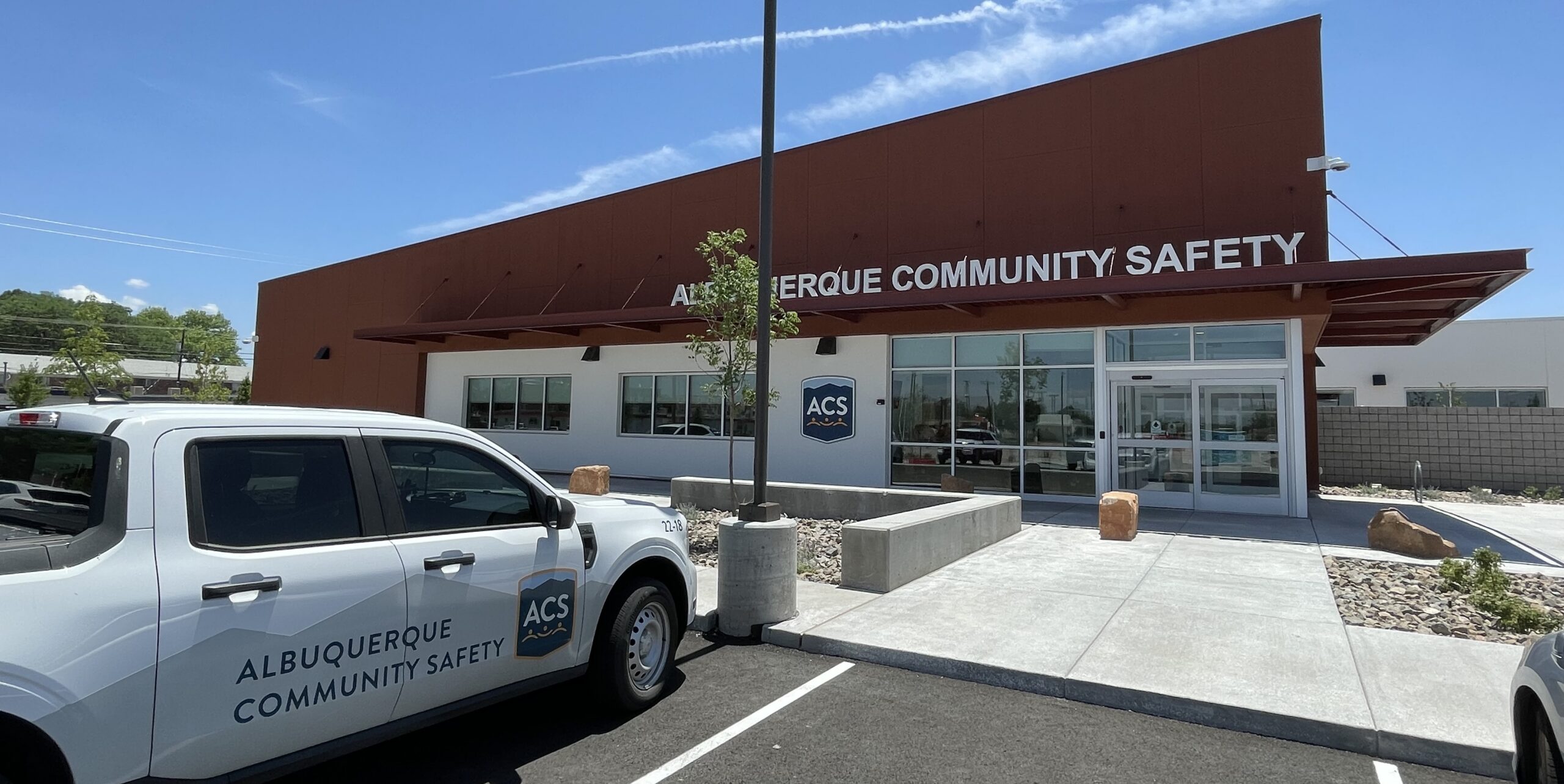
Safer Cities has extensively covered Albuquerque’s Community Safety Department (here, here, here, and here), which is “an unarmed civilian force that takes a public health approach to protecting public safety” by deploying “different types of first responders, including a ‘community responder’ division, which “responds to minor injuries or incapacitation, abandoned vehicles, non-injury accidents, needle pickups, or other calls for service in the community.”
Yet, when a responder from the Community Safety Department encounters a person who needs more help than she can give on the scene—and especially when the help needed is a stable place to stay—there often is not a constructive place to bring that person.
Now, though, the city is slowly trying to change that. As Vince Rodriguez reports for KOAT News 7 in Albuquerque, “the city has completed construction on the Gateway Housing Navigation Center” which “will have 100 beds available” to “help individuals transition to stable housing[.]” That means “the Albuquerque Community Safety Department and other homeless service providers will be able to refer people to the Gateway” to begin the journey to stable housing. Moreover, Gateway will also offer wraparound services “including Medicaid enrollment and health care referrals, pet services, and employment navigation.”
The Gateway Housing Center is only one example of the kinds of facilities that cities across the country are building as better alternatives to first responders bringing people who need help to jails or emergency rooms. For example: crisis stabilization centers give people experiencing an acute mental health crisis a warm bed and a connection to services; sobering centers give people who are intoxicated a place to sober up until they are not a danger to themselves or others; and trauma recovery centers provide a place for crime survivors and their families to connect to mental health, relocation, and job resources that they need to achieve stability after life-altering violence.