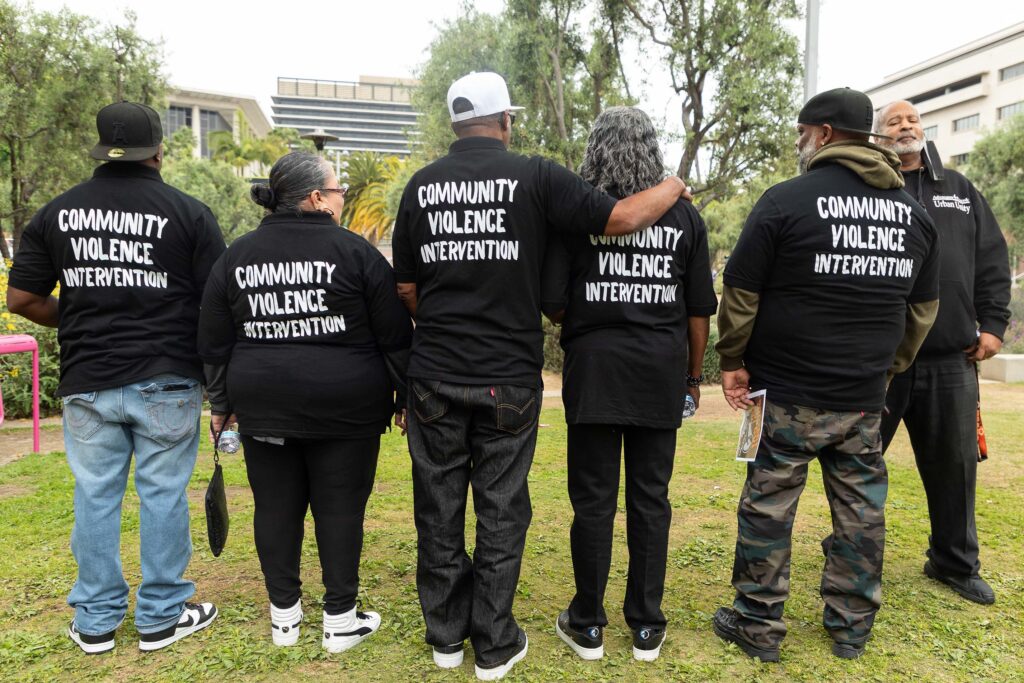
Dr. Kyle Fischer, an emergency room physician in Baltimore, Maryland, recently told The Guardian’s Sonya Singh that there aren’t “enough resources to provide the long-term physical, psychological and social care survivors need after their short-term care.” Indeed, as Dr. Fischer—and co-authors Colleen Morris and Dan Piening—explain in an article published in this month’s edition of Health Affairs:
“Unfortunately, despite the proven effectiveness and potential return on investment of these models, funding for violence prevention services has historically been limited. Consequently, programs have often been forced to rely on grants to maintain their services. The reliance on short-term and often inconsistent funding sources has created persistent challenges for [violence intervention] programs and has hindered their ability to reach programmatic sustainability.”
These funding challenges are why, as part of the Health Alliance for Violence Intervention—or, HAVI—Dr. Fischer “has been advocating for Medicaid reimbursement for more than a decade.” Now, those reimbursements are finally possible. From the Health Affairs article:
“[T]he Biden-Harris administration announced historic investments in community violence intervention, including a provision that offers guidance for states to use Medicaid to support CVI strategies … any [community violence intervention] model that provides long-term health services—such as peer support, psychological services, or case management—would be eligible.
As of the beginning of 2023, five states—California, Connecticut, Illinois, Maryland, and Oregon—have elected to use Medicaid to support CVI programming.”
As Dr. Fischer also explained to The Guardian, these Medicaid reimbursements “means that [community violence intervention] organizations can adapt and expand more easily when the need for their services grows, such as when gun violence increased during the pandemic.” Moreover, the “stability and certainty” that these reimbursements offer, while “not a panacea”, help to “shield a city’s violence prevention programs from the downstream effects of different political priorities when, for example, a new mayor takes office.”
Related: Medicaid reimbursement is also available for mobile crisis response programs. Oregon became the first state to receive the funding last year. And last week, the U.S. Department of Health and Human Services approved California and Kentucky to use the Medicaid reimbursement program to “expand access to community-based mental health and substance use crisis care” allowing the states to fund “services through mobile crisis teams by connecting eligible individuals in crisis to a behavioral health provider 24 hours per day, 365 days a year.”