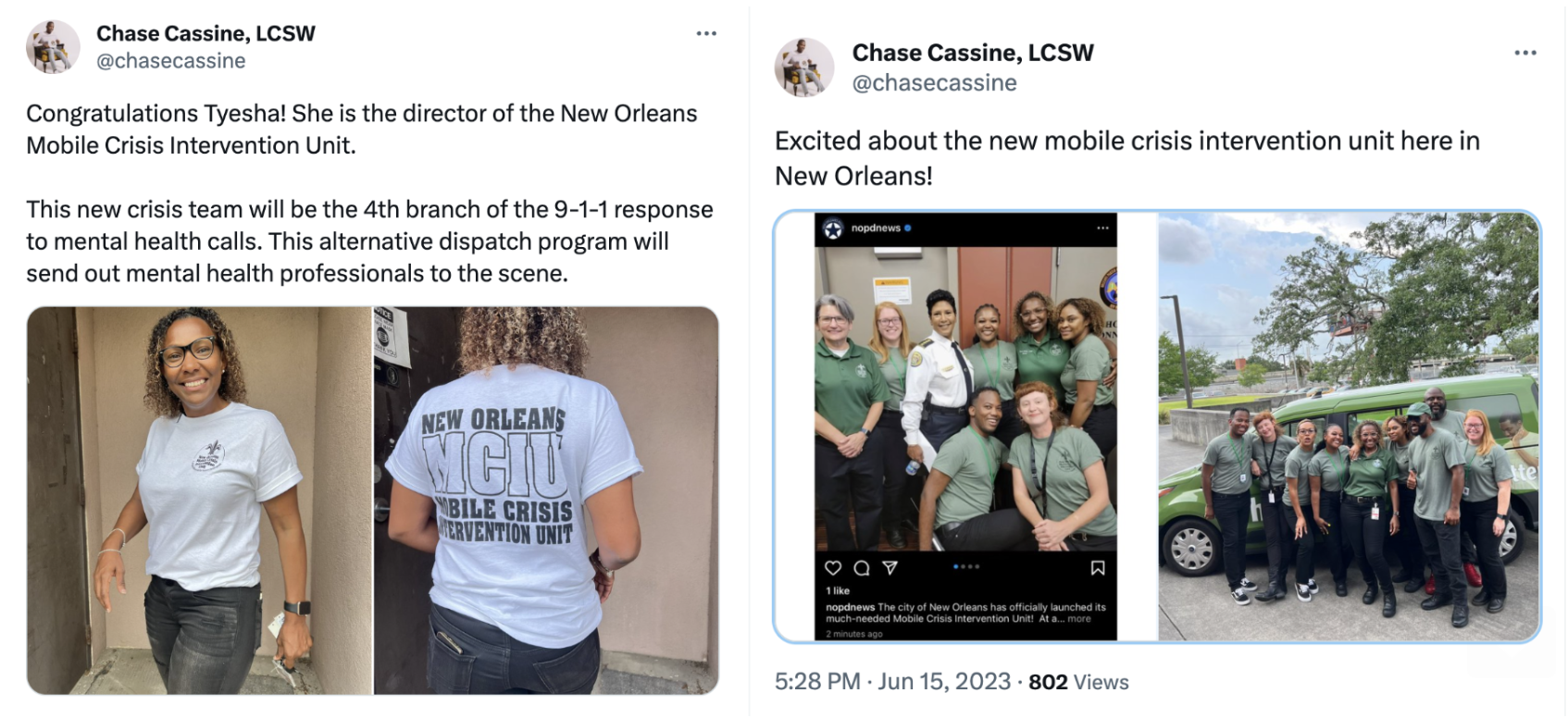
Earlier this month, New Orleans launched a civilian mobile crisis intervention unit, which, according to the city …
“is tasked to divert 9-1-1 non-violent mental health crisis calls away from police and other first responders to professionals trained in community behavioral crisis care response: 24 hours a day, 7 days a week, and 365 days a year. The [unit] will exclusively serve Orleans Parish, and provide services for any person, regardless of age, who has notified the 9-1-1 system that they, or someone they are witnessing, is experiencing a non-violent mental health crisis.”
The city is billing the mobile crisis intervention unit as the mental health focused “fourth branch” of the city’s emergency services—sitting alongside police, fire, and EMS—which is a structural positioning that illustrates that city leaders intend for the unit to become a permanent and vital part of the city’s first responder infrastructure.
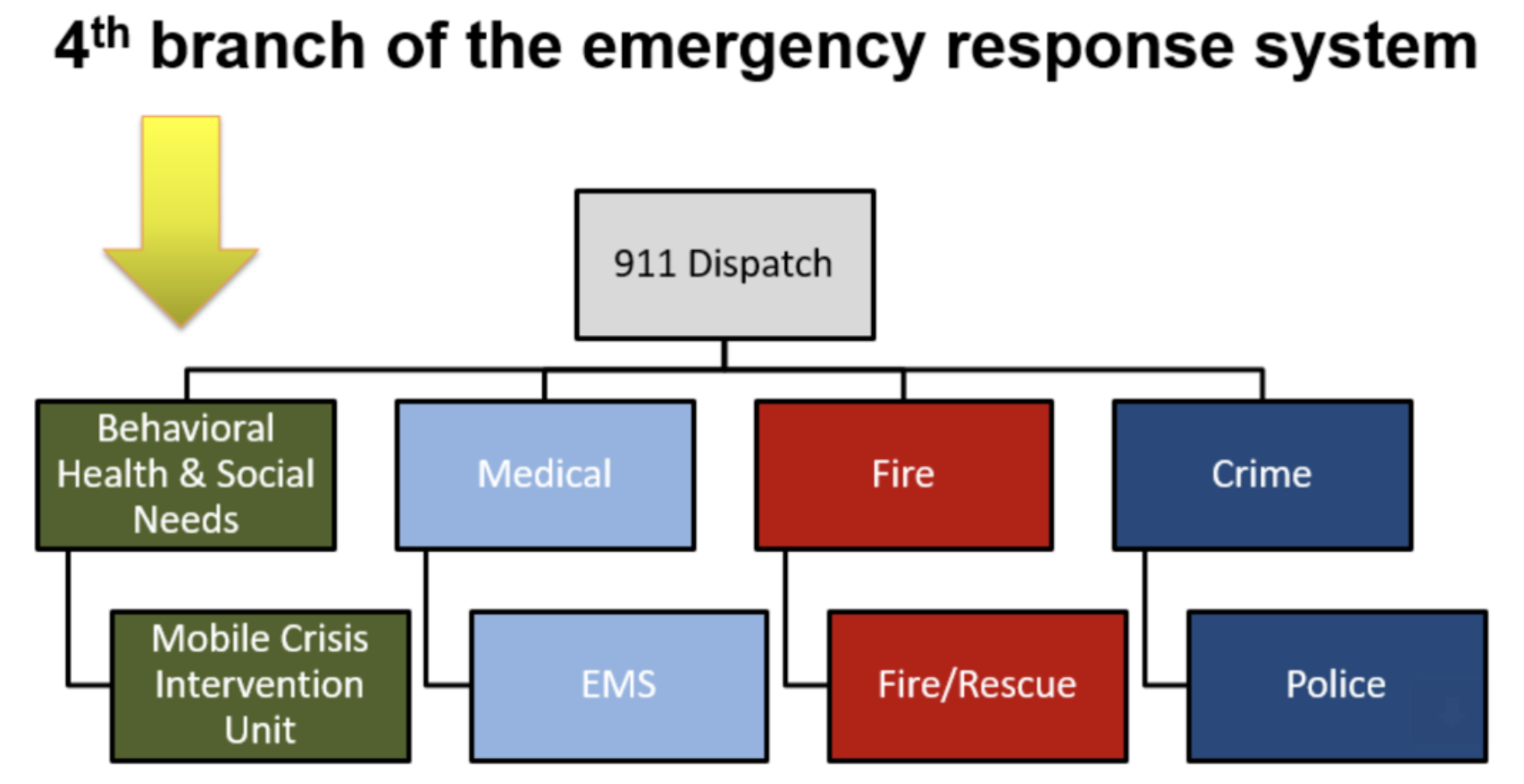
For WDSU, the local NBC television affiliate, Arielle Brumfeld reported that the mobile crisis intervention unit has “a staff of 15 trained mental health experts providing round the clock care” and “in just two weeks, the unit has helped nearly 100 people” and helped “free up law enforcement.”
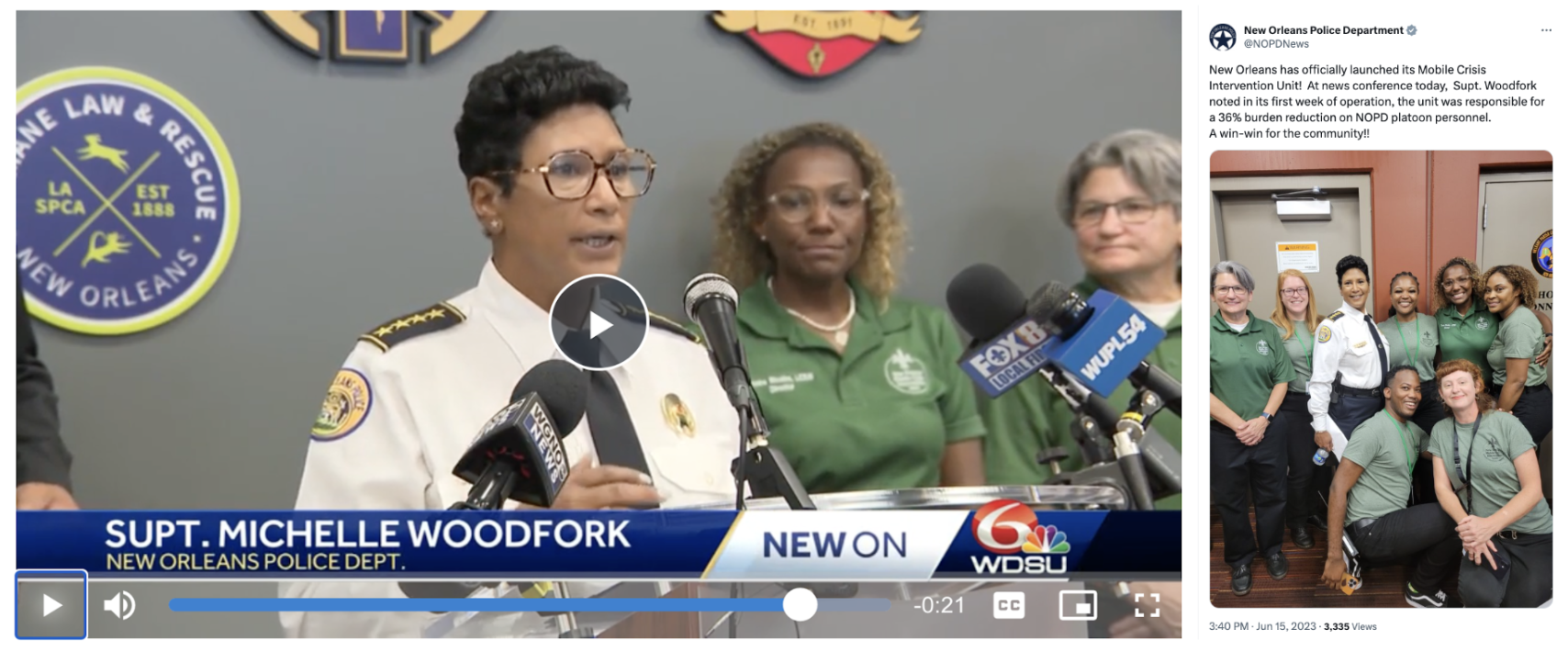
Indeed, New Orleans Police Department Superintendent Michelle Woodfork told WDSU that the mobile crisis intervention unit allows the police department to “handle those calls that are higher priority and get to them quicker. It brings our response times down. So, this is an absolutely needed tool for the NOPD.” Indeed, calling the unit a “win-win for the community,” the NOPD reported “in its first week of operation”, the mobile crisis intervention unit resulted in a “36% burden reduction on NOPD platoon personnel.”
Writing for The Lens Nola, Nick Chrastil puts the importance of the mobile crisis unit in the broader context of the city’s long-time struggle to adequately address mental illness—and the accompanying shortcomings of heavy police involvement in mental health calls for service:
“The city receives thousands of such 911 calls every year – and in the past, police have primarily responded to them. But studies show that people with serious mental illness are more likely to be killed by police and that mental-health conditions can be exacerbated by squad-car lights, sirens and arrests. Too frequently, people in crisis end up arrested or involuntarily committed to a mental hospital. The hope is that, now, the endpoint of most crises will be stabilization and treatment, thanks to dedicated teams, trained in mental healthcare and de-escalation.
…At a time when police have struggled with hours-long response times, the effort should also free up officers to respond more quickly to violent crime calls, City Councilwoman Helena Moreno said. “We need to answer the community’s needs with the right resources and conserve NOPD officers to address urgent, violent crime,” Moreno said in a statement. “Crisis response by trained professionals has proven to be successful in other cities and even found to provide improved outcomes for people in mental health crises.”