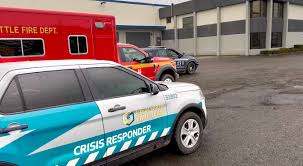
“Most response calls involving people with mental illness are not the result of criminal behavior, but of emotional crisis,” writes Robert Spinks, who is chief of police in Parsons, Kansas, in American Police Beat Magazine. Yet, mental health calls for service can be dangerous both for the person in crisis and the officer. As Chief Spinks explains, “mental health issues account for at least 1 in 4 and up to half of all fatal police shootings” and “80% [of police officers in a national survey] cited repeat contact with the same individuals suffering a mental health crisis as a top officer safety concern.”
While intensive officer training in crisis intervention is an oft-cited solution, Chief Spinks cautions that “many officers are not ready nor interested, or do not have the disposition to fully engage in this advanced specialist training. Just as many officers are not cut out to be a K-9 handler, bomb tech, SWAT or dive team officer, not all officers are cut out to be or are interested in taking on [Crisis Intervention Training][.]”
One solution the Chief points to are “mobile crisis teams [, which] utilize community-based mental health professionals to respond to individuals experiencing mental health crises. These teams typically do not involve the police initially, though police can be called upon when appropriate.”
This need to look beyond law enforcement to address acute mental illness with a “community-based and coordinated response” is critical because, as Spinks concludes:
“Mental illness and people in crisis exist in all communities, and it is not a crime. It is incumbent that police agencies and communities collaborate to address, respond to and seek new funding for sustainable mental health responses and services for those in need.”