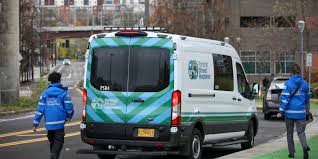
Searchlight New Mexico’s Joshua Bowling and Vanessa Sánchez profile the launch of Project LIGHT, a new unarmed mobile crisis response team in Las Cruces, New Mexico, which is being lauded as a win-win for both the police and the effort to beef-up mental health services in the city: “What understaffed police force wouldn’t embrace the opportunity to make sure their officers can focus on other, more dangerous calls, advocates ask. And if someone with mental health training can offer sorely needed resources to people in crisis, what city wouldn’t welcome that?”
The team, which is based in the city’s fire department and consists of two social workers, two paramedics and a case manager, will “provide residents with intervention for mental health crises and connect people with resources.” Battalion Chief Matthew Hiles, who oversees Project Light, says that the team will help with “talking people through crisis, providing education on disorders or medications, linking people with community resources, and transporting them to mental health centers like a hospital or the Crisis Triage Center.”
Bowling and Sánchez recount the devastating set of facts that helped catalyze Project Light’s launch:
“It was just after 6:30 one evening last April when Las Cruces police officer Jared Cosper responded to a mental health call. The family of Amelia Baca, a 75-year-old grandmother with dementia, had called 911, saying she appeared to be off her medication and was threatening them. They needed help.
Cosper, trained in crisis intervention, according to a subsequent lawsuit, arrived at the Bacas’ front door and instructed family members to step outside. Police body camera video shows Baca’s granddaughter thanking the officer and asking him to “be very careful with her.” The elderly woman — who spoke only Spanish — came to the door, a kitchen knife in each hand. ‘Drop the fucking knife,’ Cosper shouted. As the family begged and screamed in protest, he shot and killed her.”
It’s encounters like this one that led Las Cruces city councilor Johana Bencomo to champion Project LIGHT. As she told Searchlight New Mexico: “Police are not equipped to respond to behavioral health calls, even if we invested millions of more dollars in training and in policy … They are not behavioral health professionals.”
- “Tulsa Fire Department, Family & Children’s Services Teaming Up For New 24/7 De-Escalation Emergency Response.” The unarmed first responder team is being formed to “help address Tulsa’s staggering number of mental health crisis calls,” Andrea Eger reports for Tulsa World. The team is composed of trained medics and clinicians whose goal is to “try to reduce the number of people who experience a mental health crisis and end up in jail.” The team, which is based in the city’s fire department, all have “at least 15 years’ experience and the same crisis intervention training that police officers receive[.]” The program’s director, Tulsa Fire Captain Justin Lemery, told Tulsa World that in addition to de-escalation, the team has “case managers who can follow-up with these folks and see how they’re doing or if any further referrals are needed.”
- “Portland’s Unarmed Crisis Response Team Looks To Go 24/7.” Writing for the Portland Business Journal, Demi Lawrence details the planned expansion of the Portland Street Response program, which “dispatches mental health professionals, community health workers and peer specialists in lieu of police to certain 911 calls.” The program currently operates daily, but has seen a 700% increase in calls coming in year-over-year. Robyn Burek, the program’s director, told the Portland Business Journal that the demand is driven by the fact that “minor disturbance or mental health calls don’t warrant a police officer’s presence [and] really were never designed to go to police or fire, they just didn’t have the right responder in place to take them.” To meet the demand, the program intends to expand to 24/7 response over the next few months.