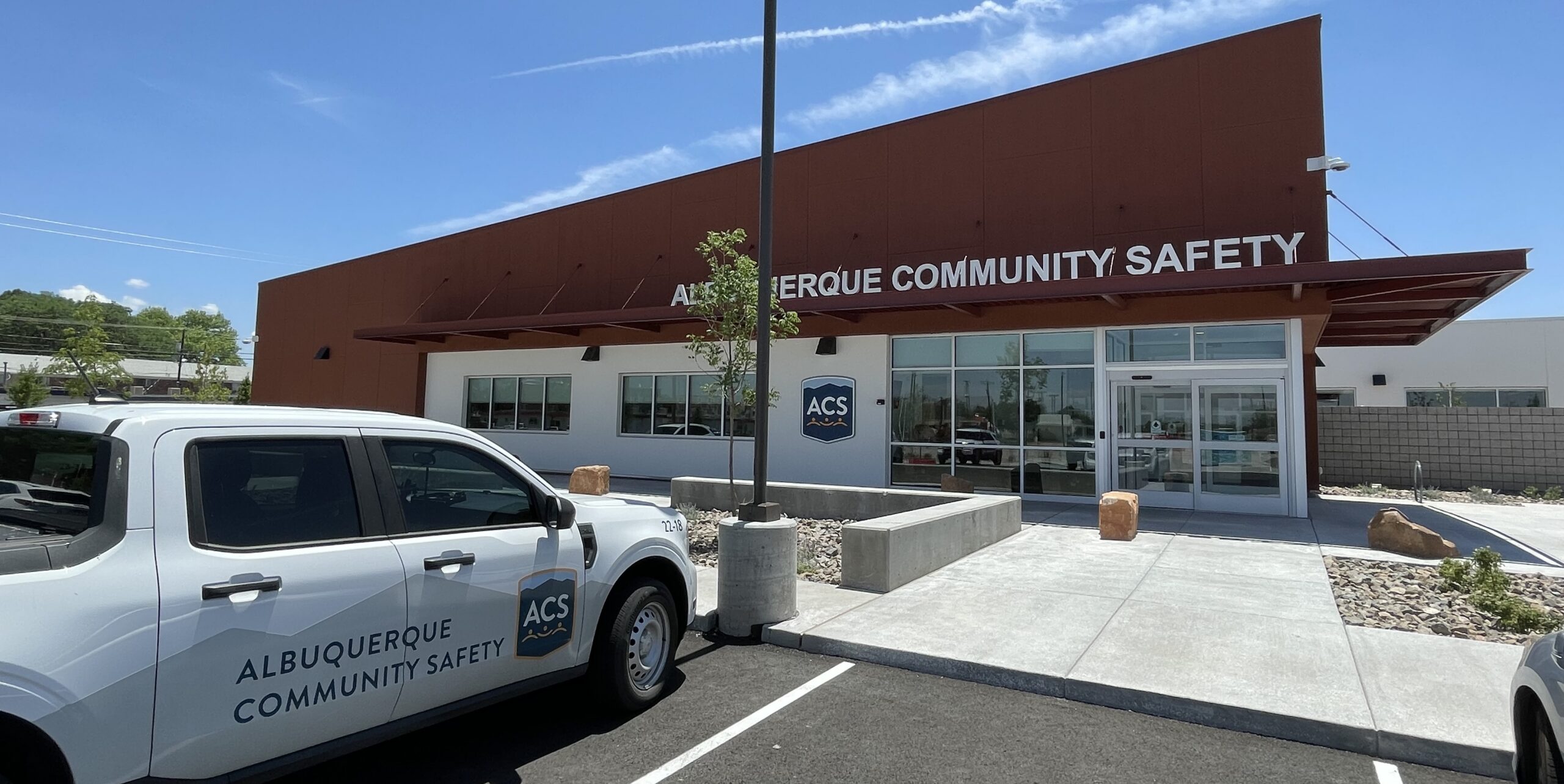
“The spirit and timing of A.C.S.’s creation, nearly three years ago, conjured a vision of greater public safety in Albuquerque, including increased protection of its residents from police,” Murat Oztaskin writes in his feature on the city’s much-lauded “third branch of public safety.”
The department’s “behavioral-health workers respond to calls, mostly from 911, about nonviolent crises involving mental health, homelessness, or substance use,” and are “trained to connect people from some of the city’s most vulnerable populations with professional help. In doing so, they also reduce those residents’ interactions with local law-enforcement agencies, which in recent years have had the second-highest fatal-shooting rate among major American cities.”
Since its creation, Albuquerque Community Safety has responded to more than twenty thousand calls, and “less than one per cent have required eventual police involvement.” Those are impressive results for the young program and compare favorably to other mobile crisis responder programs across the country. Yet they only account for “about three per cent of the million-plus [calls] that Albuquerque receives a year.”
That’s because the department “faces a mandate that outstrips its resources.” For context, “the Albuquerque police budget is more than twenty times larger.” And this imbalance comes with a tragic cost: “Albuquerque Police Department officers shot at a record eighteen people in 2022, killing ten.” Here’s Oztaskin providing a concrete example of why scaling the community safety department could help:
“By the end of the winter, A.C.S. will grow its roster of responders beyond seventy, allowing it to take on greater numbers of calls. But that workforce still won’t be enough to have staffing around the clock. Currently, responders work between 6 a.m. and 8 p.m. In August, during that overnight gap, police responded to a call about an intoxicated man parked for hours at a gas station downtown—the kind of ‘down and out’ call that might otherwise have gone to A.C.S. [T]he responding officers, after allegedly seeing a gun in [the man’s] hand, fired at him sixteen times. [Keshawn] Thomas, who was twenty-seven, died immediately.”