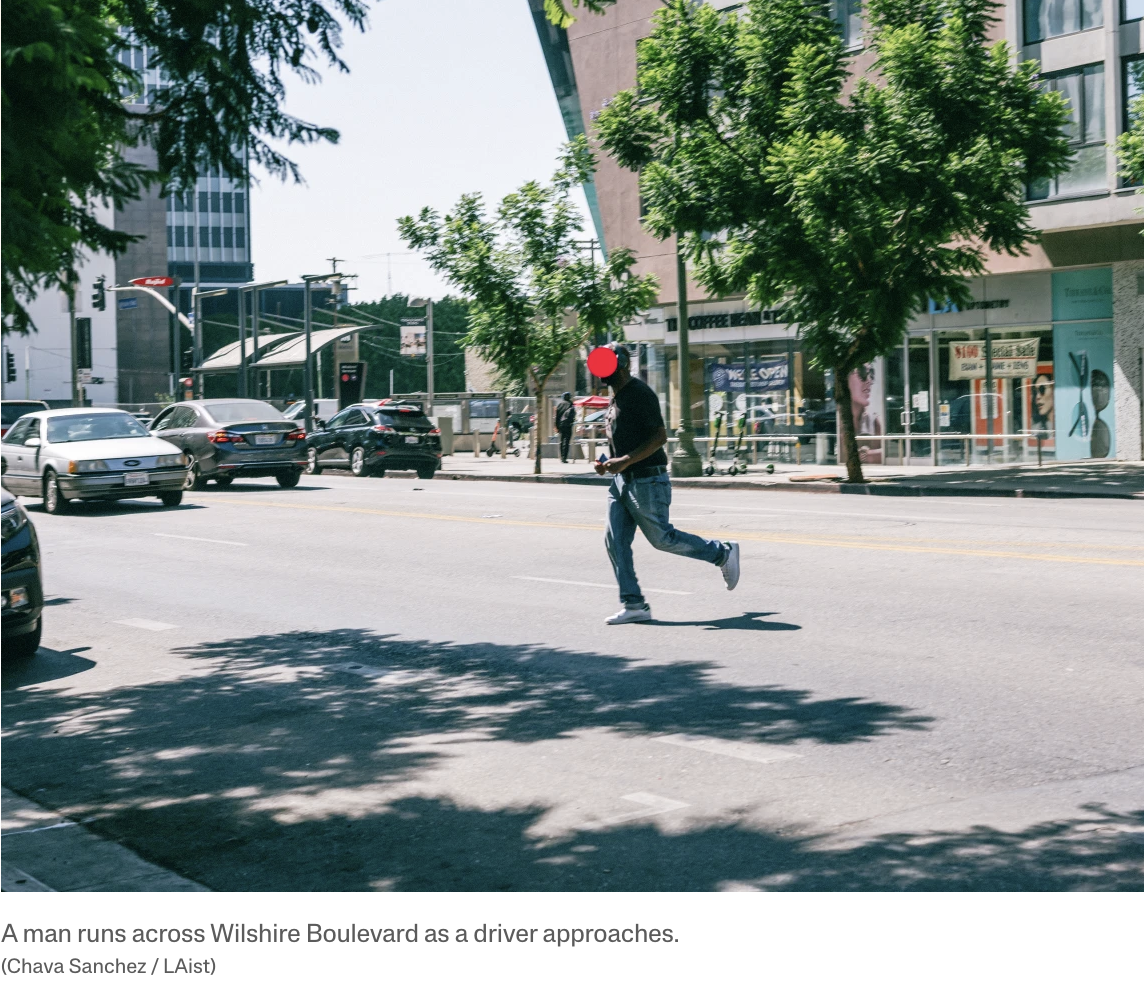
Cities taking a more comprehensive approach to public safety typically focus on the question of who is the best expert to respond to a particular situation. But sometimes the best response is no response at all. For example, last year, Philadelphia became the first major city in the United States to ban traffic stops for minor infractions such as outdated registrations, broken tail lights, or bumper issues. Another good example is the Freedom To Walk Act in California, which decriminalizes jaywalking in most situations. For LAist, Ryan Fonseca explains what the “bill does and doesn’t do” ….
“The Freedom to Walk Act does aim to protect pedestrians from ‘jaywalking’ tickets when they cross a street outside of a crosswalk or against a traffic light (and let’s be honest, most everyone has done this at some point) … But you must meet specific conditions to be in the clear. AB 2147 states that police officers should not stop and cite a crossing pedestrian ‘unless a reasonably careful person would realize there is an immediate danger of a collision with a moving vehicle or other device moving exclusively by human power’ (such as a bicycle).… Citing people for “jaywalking” has little-to-no effect on a pedestrian’s behavior and does not improve public safety. ‘So why are we doing it so much?’ [Assemblymember Laura Friedman] asked. ‘If people are jaywalking a lot in an area, it’s probably because they don’t have a good way to get across the street … I’d rather have communities start thinking about adding more crosswalks, adding better signage, putting a light up, putting up a stop sign, adding a sidewalk—doing all the things that we know actually do make people safer.’”