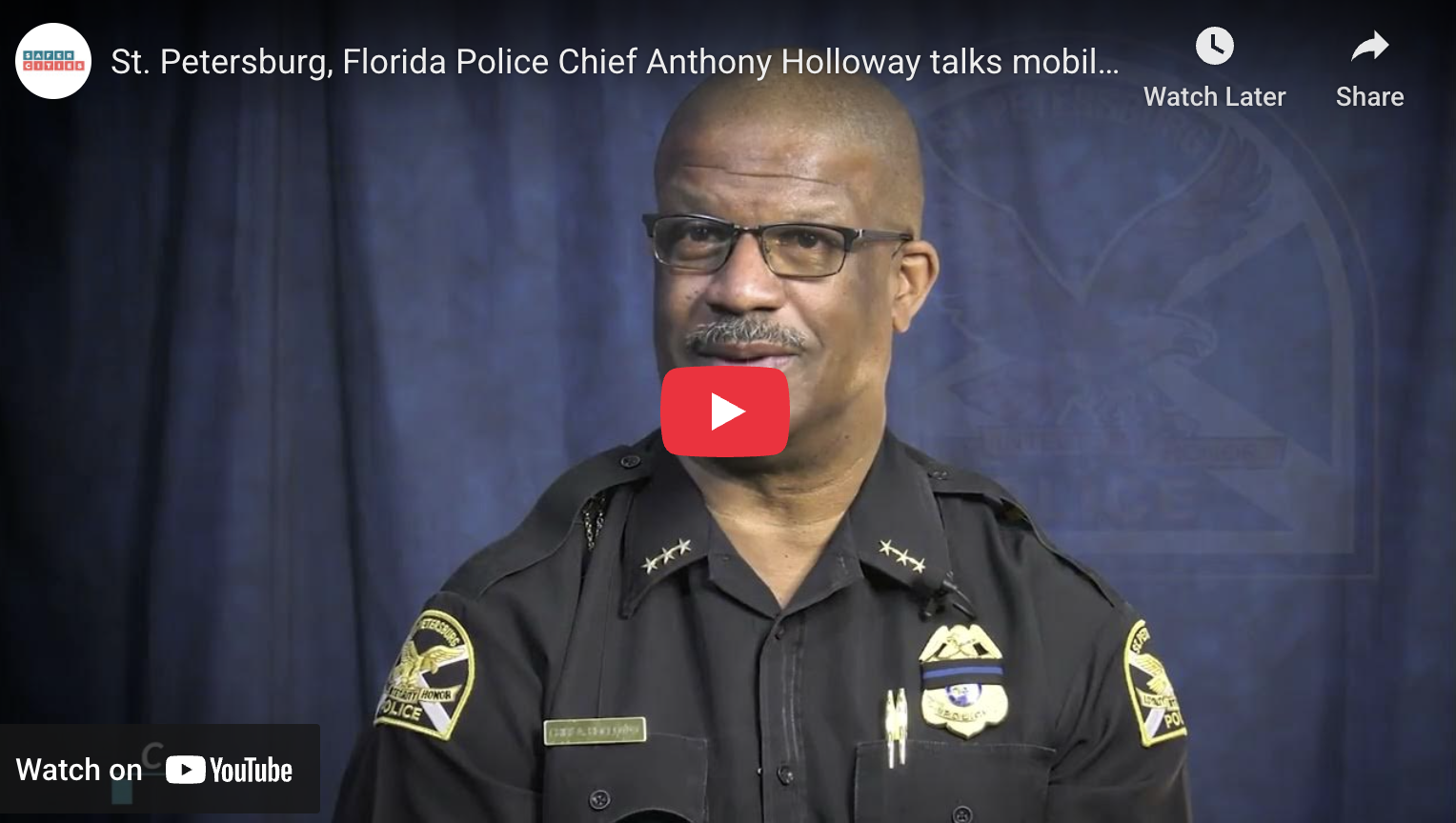
Here’s more from the chief: “This is going to be very positive for law enforcement because it does two things: One it frees up the police officers so they can do police work, so they can go out there and look for the burglars, robbers, things that we are trained and know how to do. And the other part of it is, we are getting healthcare professionals who can help law enforcement help people through their crisis … when people are calling 911 and they are going through a mental crisis then we can send a professional there to help them through their mental crisis instead of just sending an officer there with a badge and a gun.”
Related: Mobile Crisis Teams Help Kids Stay In School, Avoid Jail. 1-in-4 students attend a school that has a police officer but no nurse, social worker, or mental health counselor. This makes law enforcement the default mental health responder in America’s schools—a scenario that often leaves the needs of students unmet while nudging children into the criminal legal system. That’s why some school districts are turning to youth-focused mobile crisis response teams specifically trained to assess and treat children in crisis. As Whitney Bunts, a policy analyst at the Center for Law and Social Policy has detailed, “mobile crisis programs have been linked to decreases in school arrest, improved school attendance, and a decline in police calls.” For example, schools in Connecticut and Oklahoma that make regular use of their respective statewide youth-focused mobile crisis teams saw both school absences and arrest rates plummet.