Safer Cities IQ Is Live! Safer Cities IQ is our AI-powered intelligence tool that lets you search the full Safer Cities archive and surface relevant examples, evidence, and insights in seconds—from mobile crisis response and crisis stabilization centers to violence intervention strategies, safety ambassador programs, and public opinion on public safety.
Read more about how it works and explore its capabilities, or book a demo here to see it in action!
1. Report: Three Keys To Successfully Integrating 911 And 988. As more cities and counties launch mental and behavioral health response programs, local leaders are increasingly focused on a simple question: how do people get connected to the right responder, regardless of whether they call 911 or 988? Reporting for MindSite News, Josh McGhee highlights a new University of Chicago report examining how the two systems can work together to ensure that “no matter which number is dialed, people in crisis get the help they need.” The report draws on conversations with crisis response leaders, 911 professionals, 988 operators, researchers, and advocates from across the country, and concludes that successful integration depends on trust, communication, shared protocols, and strong partnerships between systems and first response teams so that “any person in crisis has around-the-clock access to appropriate care, provided by expert staff, regardless of where the call was received.”
For policymakers, emergency communications leaders, and first response teams, the report offers a practical roadmap for strengthening coordination between 911 and 988. Here are three key takeaways:
- Building A “No Wrong Door” Crisis Response System. Researchers’ central finding is that communities should build systems around a “no wrong door policy whereby whichever number the person in crisis calls, they will get the support they need,” so that “the transfer of calls and relevant information [happens] seamlessly through clearly defined technical and human collaboration mechanisms to ensure people access needed resources safely.” That includes clear protocols for transferring calls, shared understanding of who responds under what circumstances, and technology that allows information to move between systems without forcing callers to repeat their story.
- Embedding Mental Health Experts In 911 Call Centers Improves Coordination And Builds Trust. Researchers also emphasize relationship-building between 911 and 988 staff as a prerequisite for successful integration. Researchers pointed to Washington state’s co-location pilot, which embeds mental health experts from 988 inside a 911 communications center, and Chicago’s CARE program, which also invested heavily in integration and building trust across agencies. The report found that embedded clinicians, trusted liaisons, regular communication, and sharing outcomes from transferred calls can help agencies develop the “earned legitimacy” needed for dispatchers to confidently route calls to the most appropriate response. As former Valley Communications 911 Executive Director Lora Ueland advised: “Go slow and smart and be intentional. Meet in different forums, build camaraderie and shared vision.”
- Some States Are Already Creating Advisory Boards To Develop Successful Standards For 911/988 Integration. Researchers identified statewide advisory boards as an emerging best practice for improving coordination between 911 and 988. As of March 2025, eight states—including California, Illinois, Kansas, Massachusetts, Oregon, Utah, Washington, and Wyoming—had established advisory bodies focused on 988 implementation, researchers noted. These groups help identify legal and regulatory barriers to transferring calls, develop operational standards, review promising practices from other states, gather stakeholder feedback, and monitor implementation challenges. For lawmakers looking to strengthen crisis response systems, the report suggests that statewide governance structures can help create consistent standards while still allowing communities flexibility in how services are delivered locally.
Spotlight On Cities Seeing Promising Results After Integrating Mental Health Experts Into 911:
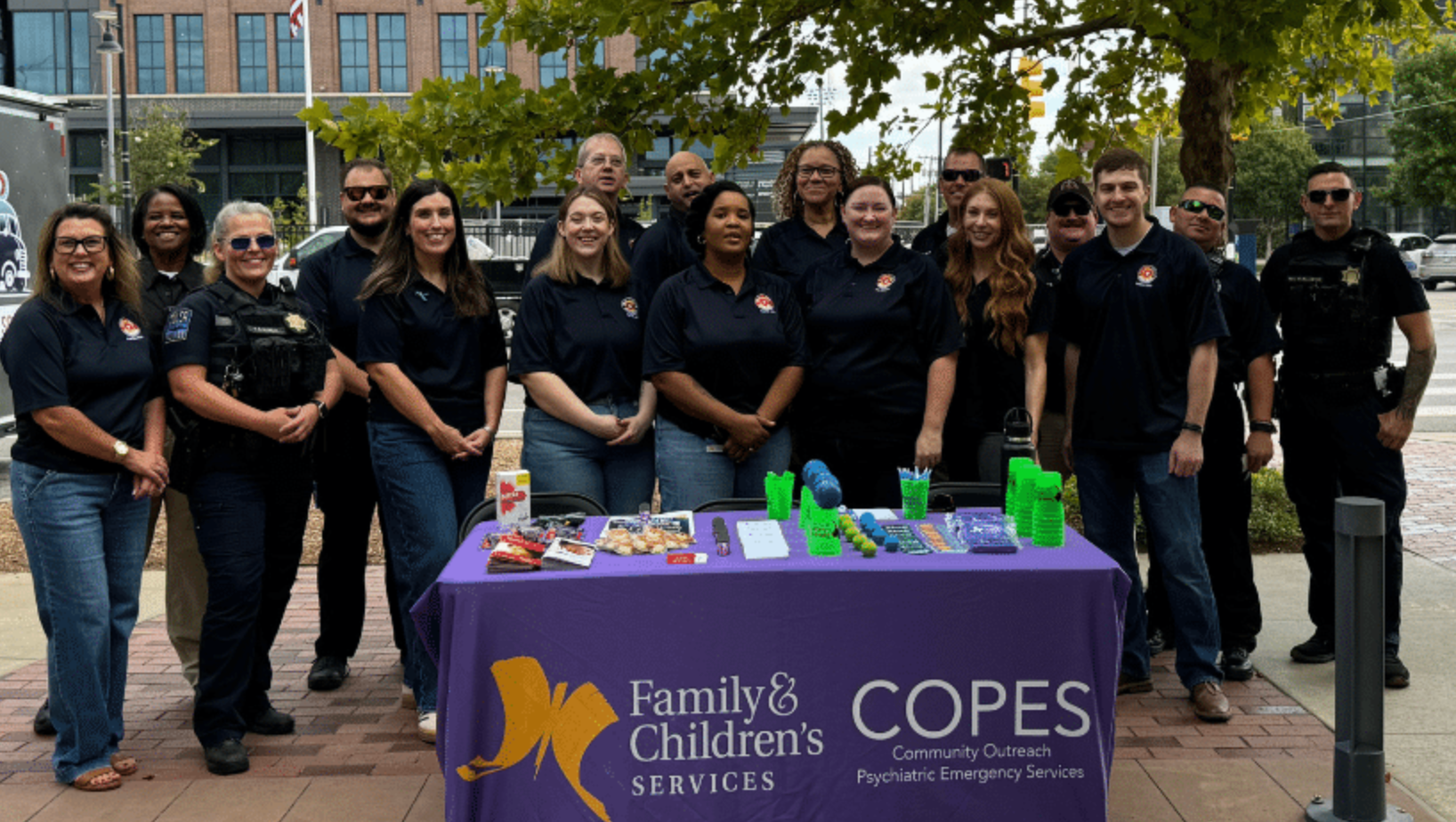
- In Tulsa, Oklahoma, “24/7 Mental Health Clinicians At 911 Center Diverted Over 6,600 Calls In 1st Year.” For FOX23, Devyn Lyon reports that Tulsa’s 24/7 COPES clinician program—which embeds “mental health clinicians inside Tulsa’s 911 Center around the clock [and already] has diverted more than 6,600 calls” to mental health experts, reducing the burden on law enforcement, during its first year. Here’s how it works: “when someone calls 911 during a mental health crisis, operators first determine whether there is an immediate public safety threat… if there is no threat… the call [is] transferred directly to a mental health clinician instead of dispatching police.” Amanda Bradley, who oversees the COPES team, explained to the news station that “mental health crises show up in the 911 calls every day… [and] require clinical de-escalation and decision making, not an automatic law enforcement response…” Officials estimated the program “has saved roughly $450,000 in public safety costs while freeing up thousands of hours for dispatchers, police officers, firefighters and EMS crews.”
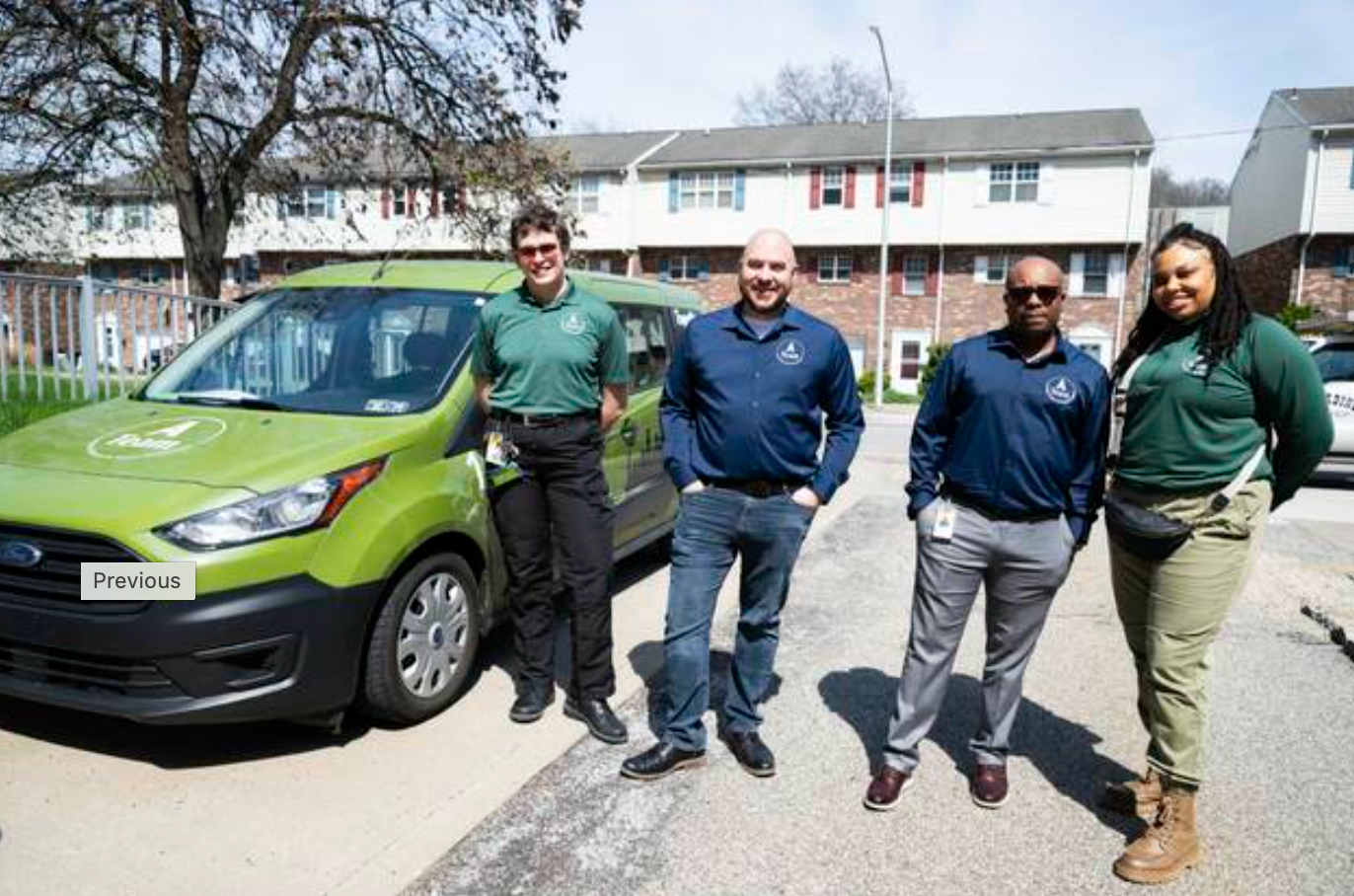
- Allegheny, Westmoreland Counties, In Pennsylvania “Are Increasingly Integrating Mental Health Professionals To Handle A Surge In Crisis Calls.” For TribLive, Patrick Varine reports on Allegheny and Westmoreland Counties where mental health experts, called the “A-Team,” respond to 911 calls “where police may not be the best option,” providing de-escalation, crisis intervention, and connections to health and human services. Program leaders describe the model as “an additional branch of emergency response along with police, fire and EMS.” Monroeville Police Chief Doug Cole, a champion of the A-team, explained to the newspaper that his officers were a bit concerned about safety at first, but now trust the A-team: “They come with access to more resources, and they’re able to take a lot of things off my guys’ hands. It’s been nothing but a win-win.”
- Raleigh, North Carolina, “Diverting Some [Mental Health-Related] 911 Calls From Police” To Mental Health Experts. For Axios, Mary Helen Moore reports that Raleigh’s CARES program embeds mental health clinicians inside the city’s 911 center to respond when callers are experiencing a mental health crisis. When those calls come in, 911 operators can transfer callers directly to a clinician, who works to calm the person, assess their needs, and connect them with care. Emergency Communications Director Dominick Nutter explained to the news site that diverting crisis calls frees up first responders and creates “a dramatic improvement” because callers receive both immediate support and “continuity of care” in the days that follow the acute crisis.
2. Cities Are Investing In Trauma Recovery Centers For Survivors Of Violence And Trauma.
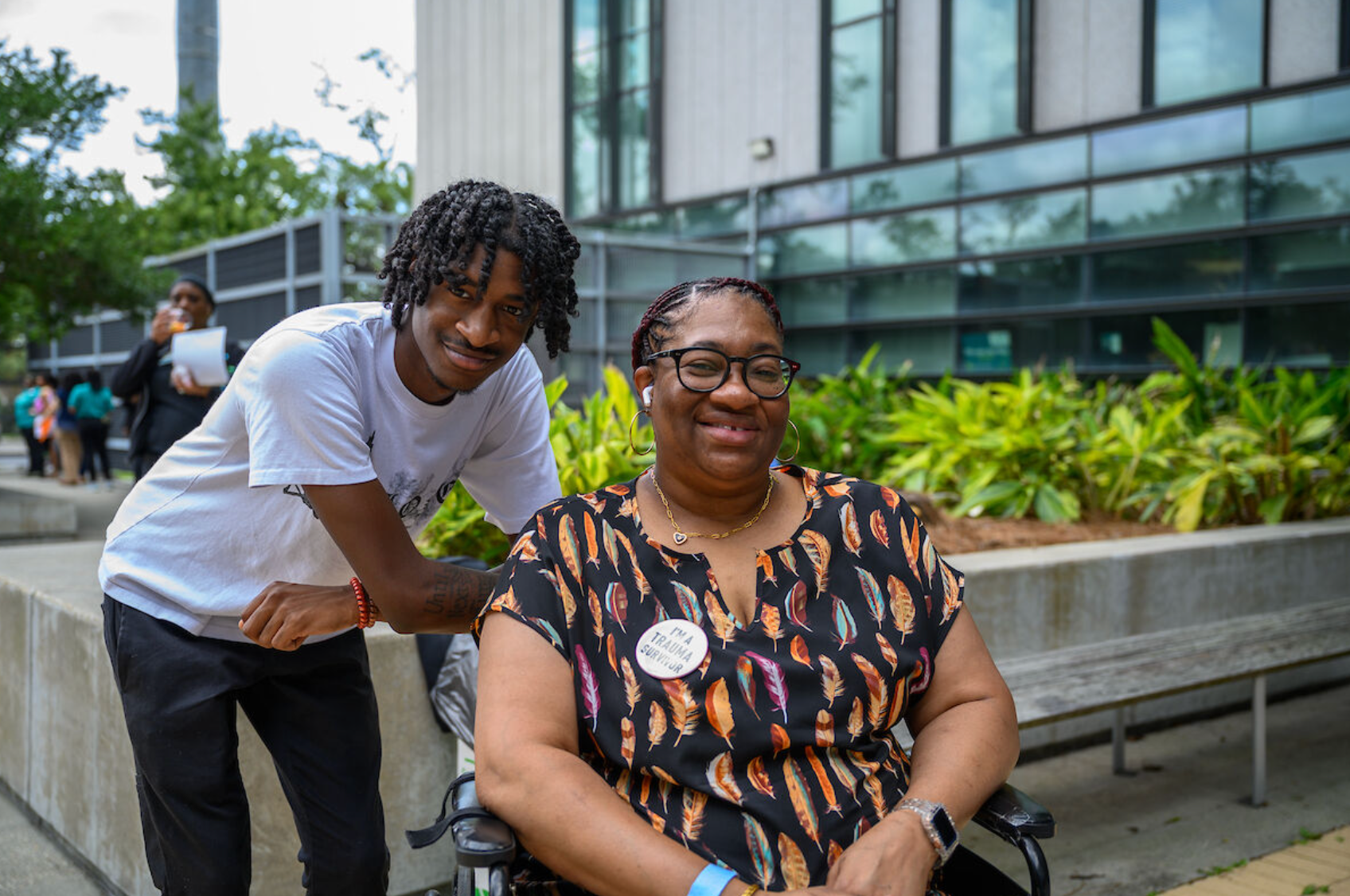
- In New Orleans, Trauma Recovery Center “Celebrates 3 Years of Expanding Trauma-Informed Care.” For The New Orleans Advocate, Stevie Licciardi reports on the rapid growth of Seeds of NOLA, a trauma recovery center embedded within University Medical Center that provides trauma-informed mental health care and wraparound services to survivors of violence, accidents, and other traumatic injuries, and has grown from serving around 400 patients annually, to now, nearly 2,000. Unlike a traditional mental health clinic, the center “focuses solely on trauma survivors,” offering support from psychologists, psychiatrists, social workers, case managers, and patient navigators to help patients stabilize, retain housing and employment, as well as battle the mental health challenges that often accompany traumatic injuries.
Megan Simon-Delone, a patient of Seeds of NOLA who was badly injured by a drunk driver and in the past three years has “undergone 13 surgeries, participated regularly in the trauma support group and met weekly with a therapist,” explained how vital the center is: “When something traumatic happens to you, it’s easy to fall into the throws of depression and PTSD, but you have to find the light at the end of the tunnel… [so it’s important to] talk to someone and connect with others who are going through what you are going through. You never know when something might be exactly what you needed.”
- Newport News, Virginia, Opens Doors To New No-Cost Trauma Recovery Center. For 13News Now, Ashley Smith reports that gun violence survivor Cameron Bertrand is opening the VIP Trauma Recovery Center in Newport News to provide “one place where people impacted by violence and trauma can find support, services, and a path forward.” The center will offer “physical therapy, victim advocacy, job training, counseling support, a clothing closet, food pantry resources and other wellness-focused services,” along with “workforce development space… and areas designed for young people and adults to gather safely.” Bertrand described the model as “a survivor-led, trauma-informed space for people to get the resources that they need to get out of survival mode,” adding that it is designed to fill “a gap for people who may struggle to find coordinated help after a crisis.” He said the center is the kind of support system he wished had existed after he was shot in 2015: “If there was a trauma recovery center in our state or in our city, I would be attending it myself.”

- Michigan State University Is Training Staff To Deliver Trauma-Informed Care To Trauma Recovery Centers. For MSU Today, Brandon Drain reports that all new employees at Henry Ford Health’s Trauma Recovery Center now complete Michigan State University’s Trauma Informed Care Certificate Program as part of their onboarding process. Founded in 2022, the center was created to provide survivors of violent crime and their families with holistic recovery services at no cost to survivors. Program Manager Ali Lakhani said the training goes beyond the basics, highlighting modules on “trauma informed communication” and “trauma informed leadership,” and “meeting survivors where they are.” The partnership is designed to strengthen both clinical practice and organizational culture, helping staff better support survivors throughout the recovery process.
3. Cities Rolling Out Summer Violence Prevention Plans Powered By Community Violence Intervention.
- Cleveland, Ohio, Launches Summer Safety Plan Centered On Violence Intervention. News 5 reports that Cleveland Mayor Justin Bibb has launched the city’s 2026 Summer Safety Plan, an effort built around reducing violence during the summer months. The plan includes “community-based violence intervention initiatives [and] violence interruption programming,” crisis response services, graffiti removal, life-skills development, and workforce readiness programs. Mayor Bibb said the strategy reflects an “all-of-government approach” to public safety, explaining that “creating safer neighborhoods also means investing in housing, education, youth programming, jobs, clean streets, and strong community partnerships.” City officials explained the plan was developed using years of crime data to target environmental and social factors linked to violence.
- Chicago, Illinois Launches Summer Safety Strategy Focused On CVI. Mayor Brandon Johnson announced Chicago’s 2026 Summer Safety Strategy, a citywide initiative centered on violence prevention, youth engagement, and community-driven safety efforts. The plan includes integrating “violence [intervention] training and resources with Community Violence Intervention and reentry efforts,” increasing “youth engagement,” supporting block clubs, and expanding “wellness programming” in priority neighborhoods. Johnson said the strategy reflects a belief that “community safety is not just about responding to harm—it’s about preventing it before it happens.”
- Detroit Launches Summer Violence Prevention Program To Connect Young People With Mentorship, Recreation. For the Detroit Free Press, Dana Afana and Andrea May Sahouri report on Detroit Mayor Mary Sheffield’s announcement of a 10-week summer initiative designed to “boost public safety and curb the trend of increased violence during the summer months.” Several community partners, including the various CVI divisions that work in the city, will help deliver programming that includes weekly neighborhood activations, extended recreation center hours, athletic programs, alongside mentorship and wraparound services. Sheffield said the initiative is rooted in the belief that “public safety is more than the absence of violence, but it is also [about] presence of community and opportunity, and belonging.”